
The dream of becoming a home barista has evolved from a niche hobby into a sophisticated lifestyle. In 2026, the technology available for domestic coffee brewing has reached unprecedented levels of precision, allowing you to pull café-quality shots in your own kitchen. However, with the market flooded with dual-boiler systems, thermoblock heaters, and integrated grinders, choosing the right machine can feel overwhelming.
Selecting the best coffee machine is not just about aesthetics; it is about matching your workflow, budget, and technical ambition with the right hardware. Whether you are a beginner looking for a “set it and forget it” experience or a seasoned enthusiast ready to dial in your grind size and pressure profiles, this guide will walk you through the essential criteria for your 2026 purchase.
Understanding Your Brewing Style: The First Step
Before looking at brands or price tags, you must define your brewing philosophy. Are you a “workflow” person who wants a quick, consistent latte before work, or an “experimenter” who loves the ritual of weighing doses and checking extraction times?
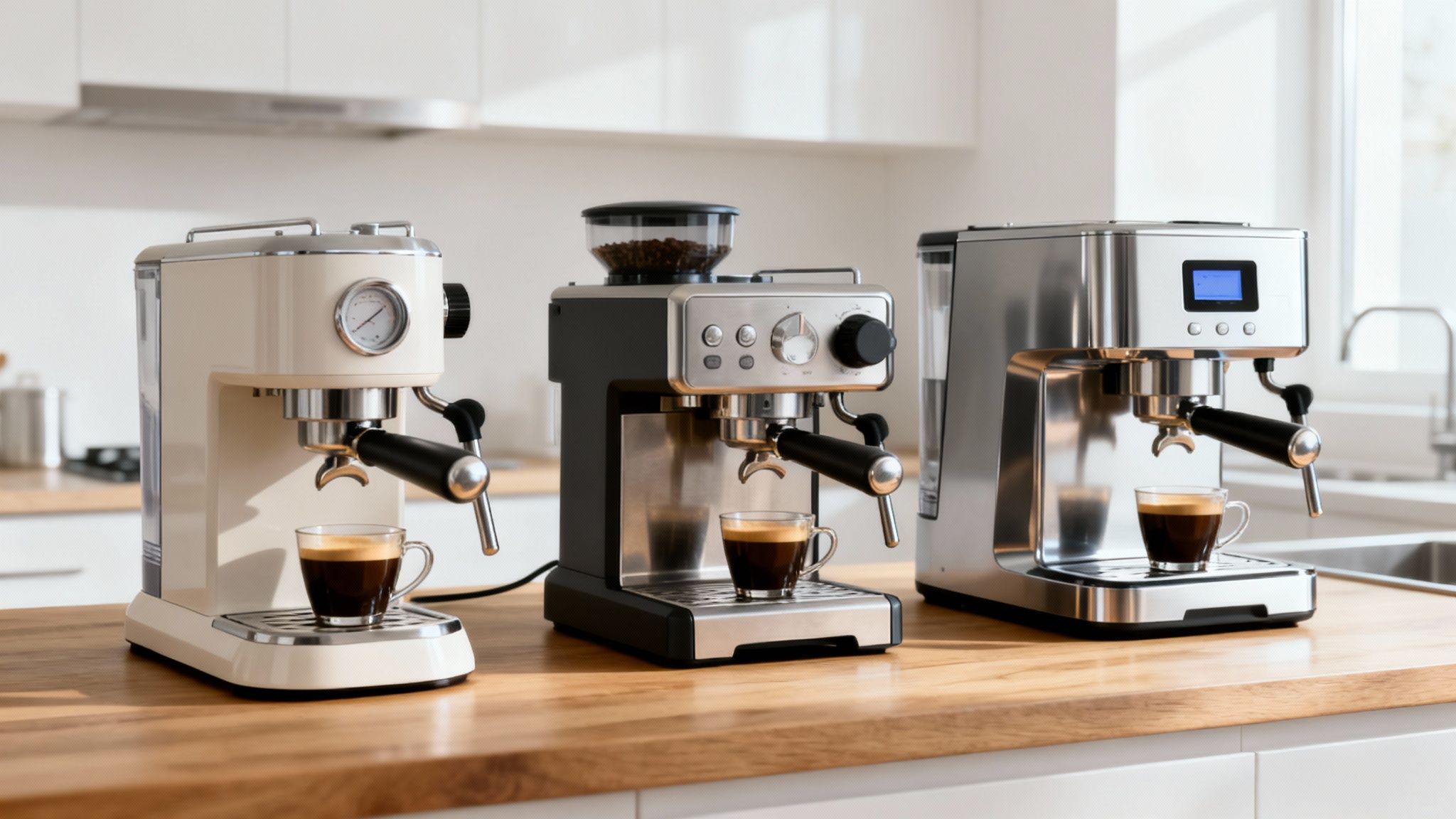
The Three Main Categories of Espresso Machines
- Manual Lever Machines: These offer the ultimate control over pressure profiling but require significant skill and physical effort. They are ideal for the purist who wants a tactile connection to the extraction process.
- Semi-Automatic Machines: These are the gold standard for home baristas. They handle the water pressure, but you control the grind, dose, and shot timing. They provide the perfect balance between convenience and mastery.
- Super-Automatic Machines: These machines grind, tamp, and brew at the touch of a button. While they offer the highest convenience, they often lack the depth of flavor customization that a true barista craves.
Key Technical Specifications to Look For in 2026
In 2026, the industry standard has shifted toward temperature stability and pressure profiling. When reading technical specs, look for these non-negotiable features.
Boiler Systems: Single vs. Dual vs. Thermoblock
Single Boiler: Affordable, but you cannot steam milk and brew espresso simultaneously. You must wait for the boiler to heat up or cool down between tasks.
Dual Boiler: The professional choice. One boiler is dedicated to brewing at the perfect temperature, while the other provides instant, high-pressure steam. This is essential for anyone who makes multiple milk-based drinks in a row.
Thermoblock/Thermocoil: Rapid heat-up times. Modern 2026 models have improved these significantly, making them a great energy-efficient choice for those who only make one or two cups a day.
PID Temperature Controllers
A PID (Proportional-Integral-Derivative) controller is no longer a luxury; it is a necessity. It ensures that your water temperature remains consistent to within a fraction of a degree. Without a PID, your shots will fluctuate in flavor, making it nearly impossible to “dial in” your favorite beans.
The Importance of the “Grind-to-Brew” Ecosystem
A common mistake among new home baristas is spending all their budget on a high-end espresso machine while neglecting the coffee grinder. In the world of coffee, the grinder is arguably more important than the machine itself.
Why You Need a Dedicated Burr Grinder
If you use pre-ground coffee or a low-quality blade grinder, you will never achieve a balanced extraction. You need a conical or flat burr grinder capable of “micro-adjustments.” This allows you to change your grind size by microns, which is the only way to correct a shot that is running too fast (sour) or too slow (bitter).
Step Adjustment vs. Stepless: If you are serious about espresso, look for a stepless grinder. Stepless models allow you to make minute adjustments without being locked into preset “clicks,” giving you infinite control over your shot time.
Retention: Look for “single-dose” grinders. These are designed to ensure that the coffee you put in is exactly what comes out, with no old grounds left trapped inside the burrs from yesterday’s session.
Evaluating Build Quality and Durability
In 2026, the trend in home espresso equipment is toward repairability and longevity. Before hitting the “buy” button, consider the following:
1. Material Construction
Avoid machines with excessive plastic parts in the brewing group. Brass and stainless steel are the industry standards because they retain heat better and are less prone to cracking under high pressure.
2. Maintenance Requirements
Does the machine use a standard 58mm portafilter? If it does, you will have access to a massive market of aftermarket accessories like precision baskets, bottomless portafilters, and high-quality tampers. Standard sizes make your machine “future-proof” and easier to repair.
3. The “Serviceability” Factor
Can you easily descale the machine? Is the pump accessible? Some modern machines are designed for the “disposable” economy, while others are built to last for decades. Research the brand’s reputation for customer support and the availability of spare parts before investing.
Setting Your Budget: What to Expect in 2026
The market for home espresso machines is vast, ranging from $300 entry-level units to $5,000 professional-grade home rigs. Here is a realistic breakdown of what your investment gets you:
$300 – $700 (Entry Level): You will get a capable semi-automatic machine. Expect some plastic construction and a learning curve for milk texturing.
$800 – $1,800 (Prosumer Entry): This is the “sweet spot” for most home baristas. You get PID control, better steam pressure, and heavy-duty components.
$2,000+ (Professional Grade): You are paying for features like rotary pumps (quieter and more durable), dual boilers, and advanced flow-profiling capabilities.
The Role of Water Quality
Even the best machine in the world will fail if you use poor-quality water. Water makes up 98% of your espresso. In 2026, more home baristas are using remineralized distilled water or high-end filtration systems to protect their machines from scale buildup and to enhance the flavor profile of their coffee.
Using filtered water will not only make your coffee taste better, but it will also significantly extend the lifespan of your pump and boiler by preventing mineral deposits. If you are investing in a machine over $1,000, consider a dedicated water filtration system as a mandatory accessory.
Expert Tips for the 2026 Home Barista
To truly master your craft this year, focus on these three habits:
- Weigh Everything: Use a digital scale to measure your dose in grams and your output in grams. Aim for a 1:2 ratio (e.g., 18g of coffee in, 36g of espresso out) as a starting point.
- Practice Milk Texturing: Steam is a skill. Watch videos on “micro-foam” technique and practice with oat milk or whole milk until you can consistently create “wet paint” texture.
- Clean Your Equipment: Backflushing your machine with a cleaning detergent once a week is the single best way to ensure your shots stay sweet and free of rancid oil buildup.
Conclusion: Crafting Your Perfect Ritual
Selecting the best coffee machine for your home bar is a journey, not a destination. By 2026, the technology has reached a point where the gap between the local café and the home kitchen has never been smaller. Remember that the “best” machine is the one that fits your daily routine and makes you excited to wake up in the morning.
Start by identifying your budget, prioritize a high-quality grinder, and don’t be afraid to invest in the accessories that make your workflow more enjoyable. Whether you are pulling a classic ristretto or steaming silk-smooth milk for a flat white, the perfect cup is now well within your reach. Happy brewing!