
Traveling in 2026 demands more than just a passport and a boarding pass; it requires tactical precision regarding your gear. With airlines tightening enforcement on overhead bin space and weight restrictions, selecting the perfect carry-on size has shifted from a preference to a necessity. If you want to avoid expensive gate-check fees and the stress of a cramped terminal, you need to understand the nuances of luggage dimensions.
Whether you are a frequent business traveler or a digital nomad planning your next escape, this guide will walk you through everything you need to know to choose the right carry-on luggage size for your specific travel needs.
Understanding the “Universal” Carry-On Myth
Many travelers believe there is a single, global standard for carry-on luggage. Unfortunately, in 2026, no universal size exists. While the International Air Transport Association (IATA) suggests a guideline of 22″ x 18″ x 10″, most major airlines have their own proprietary restrictions.
Before buying, you must check the specific policy of your primary airline. Domestic carriers in the U.S. generally allow for slightly larger dimensions, while international and budget carriers often enforce stricter, smaller limits to maximize cabin capacity.
Crucial Factors for Choosing Your Carry-On
When shopping for a new bag, size is only the starting point. To truly master your travel game, consider these three pillars of luggage selection:
1. Dimensions vs. Capacity
Always remember that exterior dimensions include wheels and handles. When measuring your potential bag, do not ignore these protrusions. A bag that measures 22 inches on the website might actually reach 24 inches once you account for the wheels, which could result in a mandatory gate check.
2. Weight Considerations
In 2026, weight is becoming as critical as size. Even if your bag fits in the sizer, some international airlines have a 7kg to 10kg weight limit for carry-ons. Opt for high-quality, lightweight materials like polycarbonate or ballistic nylon to ensure you aren’t wasting your weight allowance on the luggage itself.
3. Hard-Shell vs. Soft-Side
Hard-shell luggage offers superior protection for electronics and fragile items, but it lacks the flexibility to “squish” into tight overhead bins. Soft-side luggage often features exterior pockets, which are a godsend for quick access to your laptop, passport, or liquids at security checkpoints.
<img alt="Carry-On Luggage Size Chart – Find the Ideal Fit for Your Trip" src="https://m.media-amazon.com/images/I/31FkiuZQnCL.SL500.jpg” style=”max-width:100%; height:auto; border-radius:8px; margin: 1rem 0;” />
How to Measure Your Luggage Like a Pro
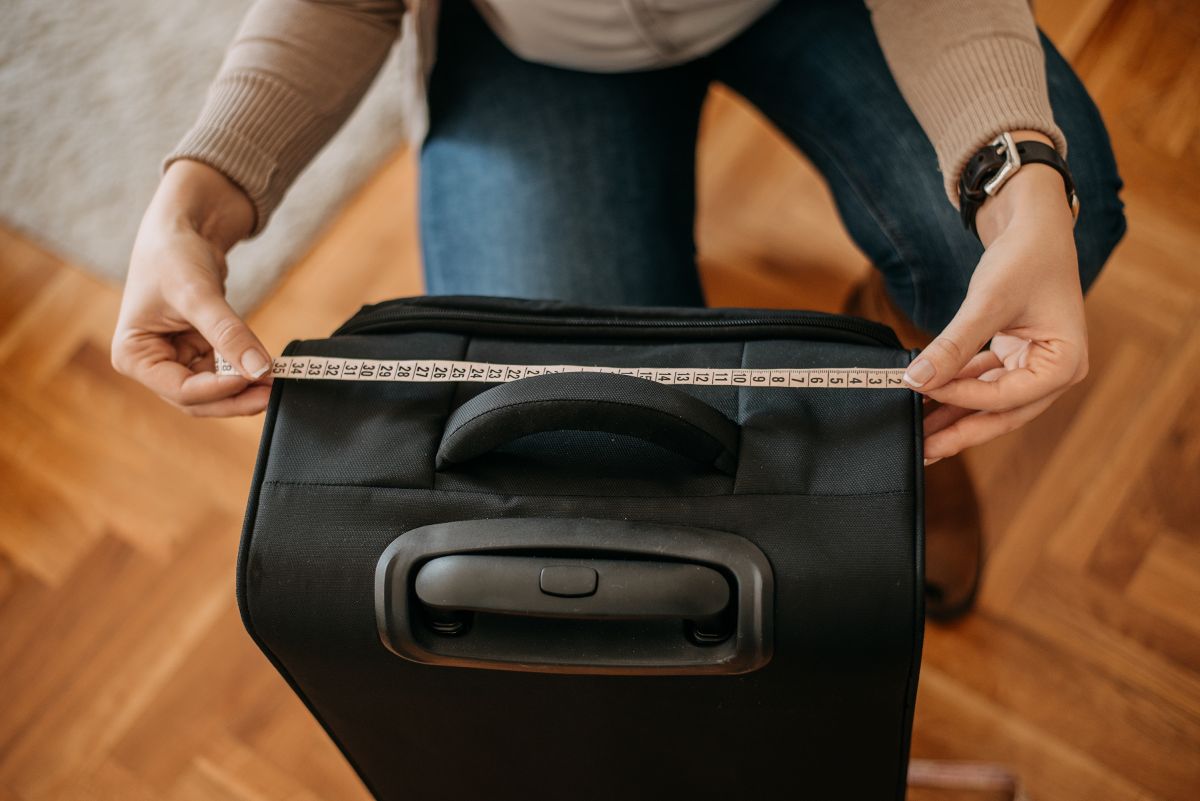
To avoid surprises, you need to know how to measure your suitcase accurately. Place your bag on a flat surface and use a measuring tape to capture the height (from the floor to the top of the handle), width, and depth.
If you are a frequent flyer across different airlines, consider purchasing a “convertible” or expandable carry-on. These bags allow you to shrink your footprint for strict budget carriers and expand it when you have more room. However, always be mindful of the expanded depth—don’t let it exceed the airline’s maximum limit!
Regional Differences: Domestic vs. International
If you are flying within the United States, you generally have more leeway. Most U.S. carriers allow a carry-on size of approximately 22″ x 14″ x 9″.
However, if your travel plans involve a trip to Europe or Asia, you must be more cautious. Many European budget airlines, such as Ryanair or EasyJet, have very specific “under-seat” or “overhead” requirements that are significantly smaller than their American counterparts.
Pro-Tips for Maximizing Your Space
Once you have chosen the right carry-on size, the next challenge is packing it efficiently. Here are three expert tips for 2026:
- Utilize Packing Cubes: These are essential for compressing clothes and keeping your bag organized. They effectively turn your suitcase into a structured filing cabinet.
- Wear Your Bulkiest Items: If you’re worried about weight or space, wear your coat and heaviest shoes on the plane. This saves precious volume inside your luggage.
The “Personal Item” Strategy: Most airlines allow a carry-on plus* a personal item. Choose a backpack or tote that fits comfortably under the seat in front of you to maximize your total carrying capacity.
Conclusion: Investing in the Right Bag
Choosing the right carry-on luggage size is an investment in your future travel comfort. By prioritizing compliant dimensions, lightweight materials, and high-quality wheels, you eliminate the anxiety of gate-checking your bag and protect your belongings from unnecessary handling.
Take the time to verify your airline’s requirements, measure your bag carefully, and focus on the features that solve your specific travel pain points. With the right gear, your 2026 travels will be smoother, faster, and far more enjoyable.